Santoso


Back to Work
In-Store Kiosk
Testing
Ad-hoc
Duration
2 Months
Compliance
ADA
Company
T-Mobile
Role
Senior Experience Designer
Type
Retail
T-Mobile is known for being an eccentric telecom brand. They exist in the zeitgeist of popular culture for offering deals and connecting with musicians and artists responsible for shaping trends. While consumer mobile has traditionally relied on in-store sales, e-commerce, especially in this age, has become a viable channel as well. But sometimes, the latter, lacks what in-store can offer; a personalized experience. Talking with a real human being. Having access to the actual mobile device to make an informed purchase. These things are extremely tangible—and combining it with technology helps enhance that experience towards something richer.

Problem
Realize Ambiguity
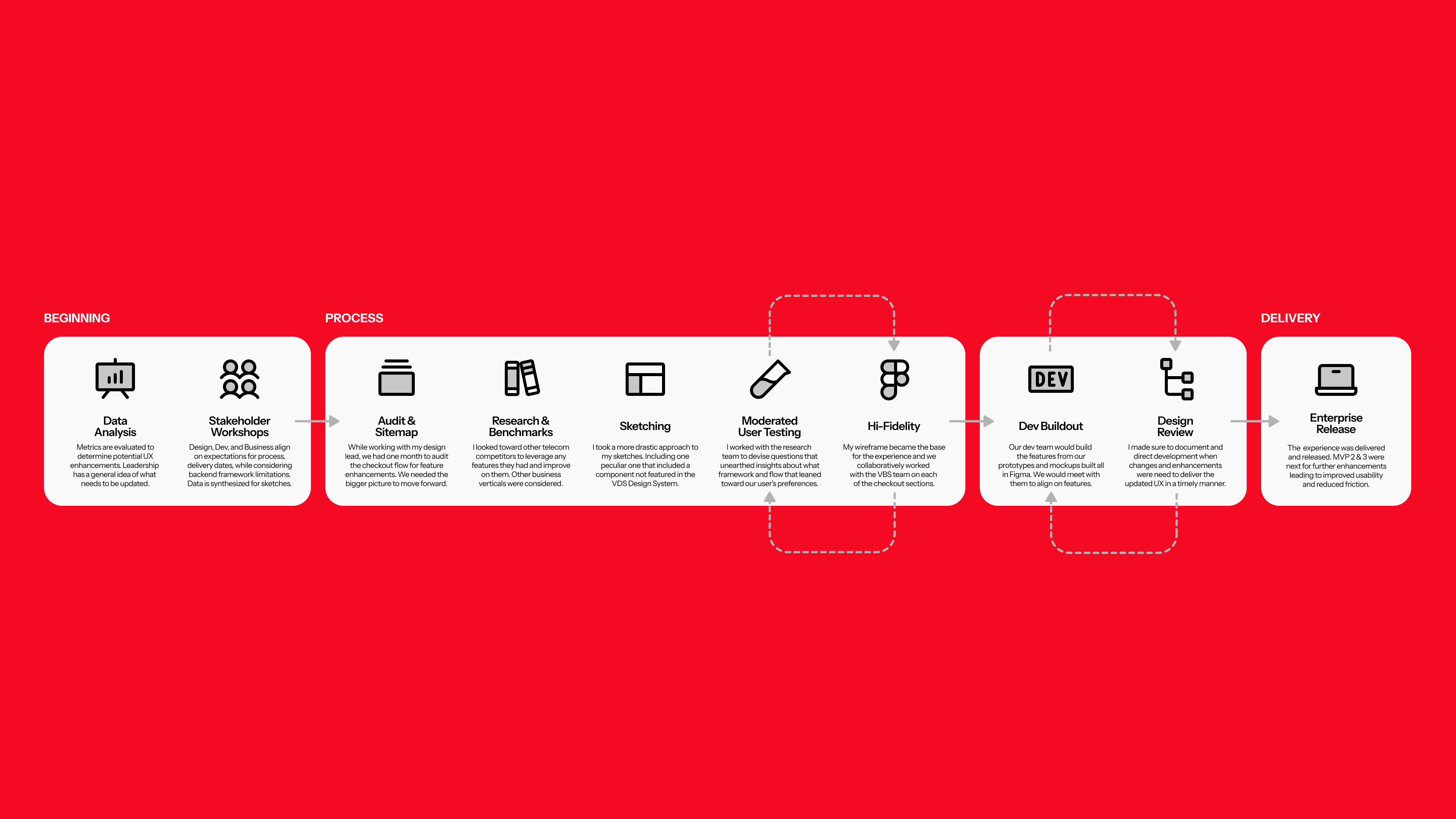
T-Mobile like many telecom companies, offers deals and bundles that cater to specific customer preferences. This project was aimed at informing and converting that purchase outcomes through a in-store kiosk wall. However, there was no data we could pull from to set benchmarks, little things like heat maps to understand favorability, No budget for user testing, and the added requirement that it would only be featured in two midsized stores in specific locations. In cooking, sometimes you lack an ingredient that is essential to the recipe, so how do you adapt it to be a delicious and memorable meal? Ambiguity can be extremely scary but sometimes, great ideas spur great solutions in lieu of duress.
Company
Sketch & Strategy
Our art directors focused on the mobile needs of users in the home — using household items to reveal bundle deals — which is relatable because mobile devices are already a core part of home life. Despite the lack of research capabilities, my creative director and I worked toward solutions that could make a real impact. Not all hope was lost though. We had access to a kiosk wall prototype, which gave us useful context around scale and interactivity. Our process was fairly straightforward. Since formal research wasn't a factor, we leaned heavily on sketching, understanding the technical specifications for the kiosk, and weekly meetings with creative leadership and the tech team. While navigating that ambiguity, we realized accessibility was going to be critical to the kiosk's success. We made sure to test our sketches directly on the kiosk and understand the friction disabled users experienced — especially individuals using wheelchairs.

Solution
Framework & Compliance
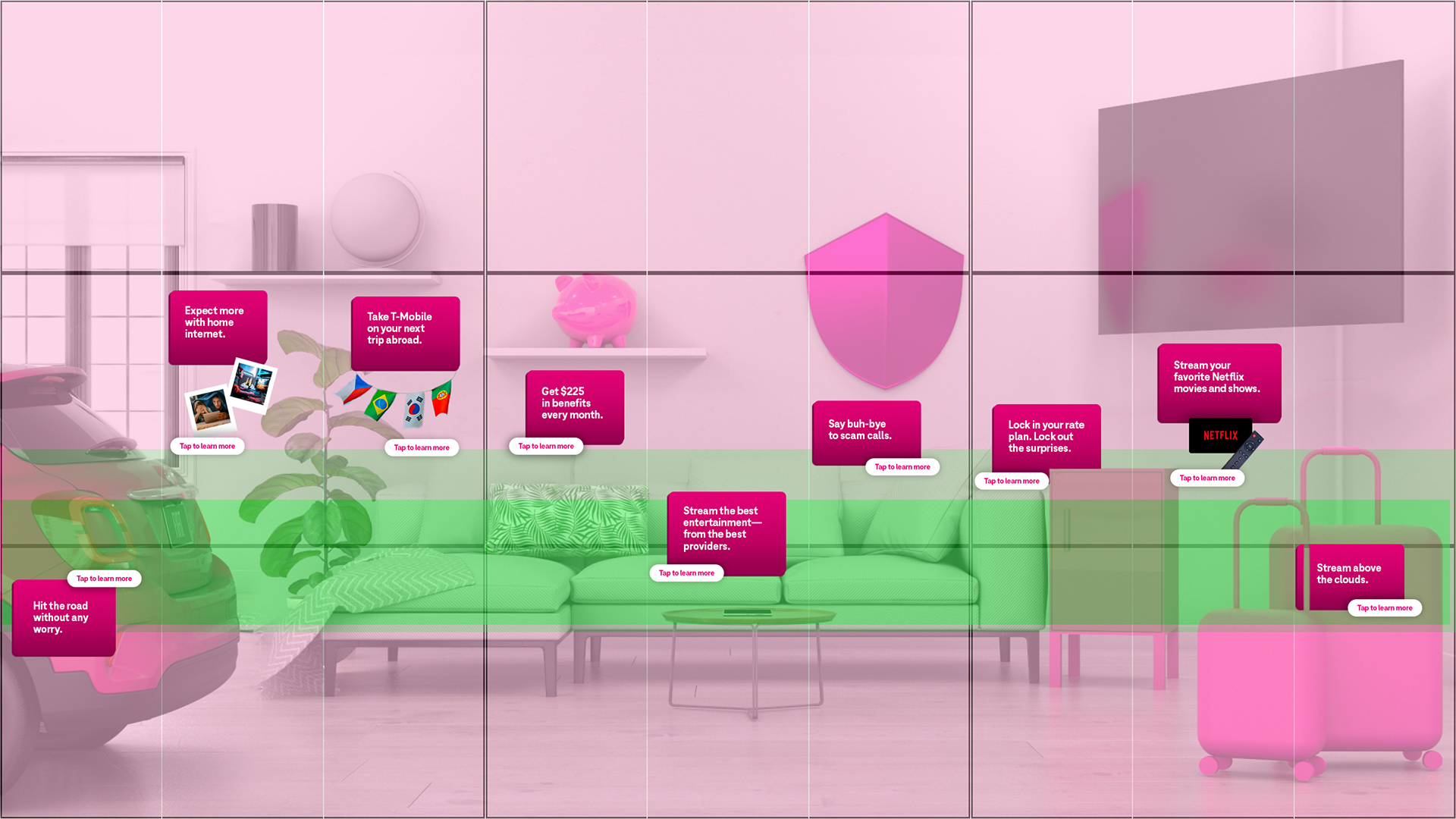
With at least one area we could guide toward success, our solution was straightforward. With accessible users in mind, we divided the wall into separate zones — which also helped provide scalability and ensured all abilities could interact with it. Since the kiosk had a motion sensor, we helped creative hone in on the interaction and engagement by revealing a benefit title card that customers could further interact with to uncover bundles. Unfortunately this project had a lot of ambiguous factors, however the fact that accessibility was baked in ensured the experience was inclusive — because connectivity is extremely important regardless of ability.
Collaborators
Pedro Andres Sanchez
Chad Hessoun
© 2026


Santoso
Visual
UX
Product
Work
About


Back to Work
In-Store Kiosk
Testing
Ad-hoc
Duration
2 Months
Compliance
ADA
Company
T-Mobile
Role
Senior Experience Designer
Type
Retail
T-Mobile is known for being an eccentric telecom brand. They exist in the zeitgeist of popular culture for offering deals and connecting with musicians and artists responsible for shaping trends. While consumer mobile has traditionally relied on in-store sales, e-commerce, especially in this age, has become a viable channel as well. But sometimes, the latter, lacks what in-store can offer; a personalized experience. Talking with a real human being. Having access to the actual mobile device to make an informed purchase. These things are extremely tangible—and combining it with technology helps enhance that experience towards something richer.
Problem
Realize Ambiguity
T-Mobile like many telecom companies, offers deals and bundles that cater to specific customer preferences. This project was aimed at informing and converting that purchase outcomes through a in-store kiosk wall. However, there was no data we could pull from to set benchmarks, little things like heat maps to understand favorability, No budget for user testing, and the added requirement that it would only be featured in two midsized stores in specific locations. In cooking, sometimes you lack an ingredient that is essential to the recipe, so how do you adapt it to be a delicious and memorable meal? Ambiguity can be extremely scary but sometimes, great ideas spur great solutions in lieu of duress.
Process
Sketch & Strategy
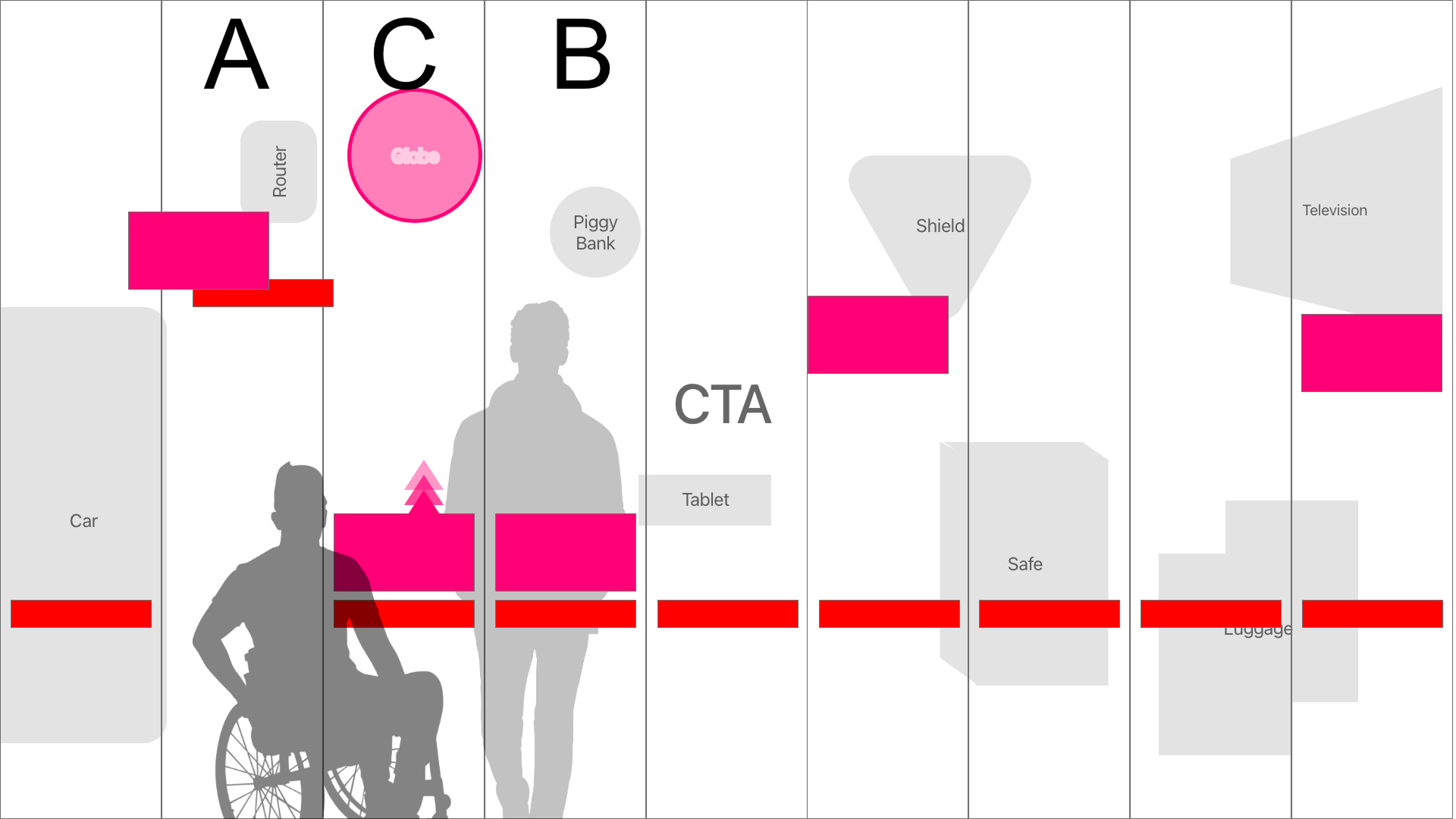
Our art directors focused on the mobile needs of users in the home — using household items to reveal bundle deals — which is relatable because mobile devices are already a core part of home life. Despite the lack of research capabilities, my creative director and I worked toward solutions that could make a real impact. Not all hope was lost though. We had access to a kiosk wall prototype, which gave us useful context around scale and interactivity. Our process was fairly straightforward. Since formal research wasn't a factor, we leaned heavily on sketching, understanding the technical specifications for the kiosk, and weekly meetings with creative leadership and the tech team. While navigating that ambiguity, we realized accessibility was going to be critical to the kiosk's success. We made sure to test our sketches directly on the kiosk and understand the friction disabled users experienced — especially individuals using wheelchairs.
Solution
Framework & Compliance
With at least one area we could guide toward success, our solution was straightforward. With accessible users in mind, we divided the wall into separate zones — which also helped provide scalability and ensured all abilities could interact with it. Since the kiosk had a motion sensor, we helped creative hone in on the interaction and engagement by revealing a benefit title card that customers could further interact with to uncover bundles. Unfortunately this project had a lot of ambiguous factors, however the fact that accessibility was baked in ensured the experience was inclusive — because connectivity is extremely important regardless of ability.
Collaborators
Pedro Andres Sanchez
Chad Hessoun
© 2026